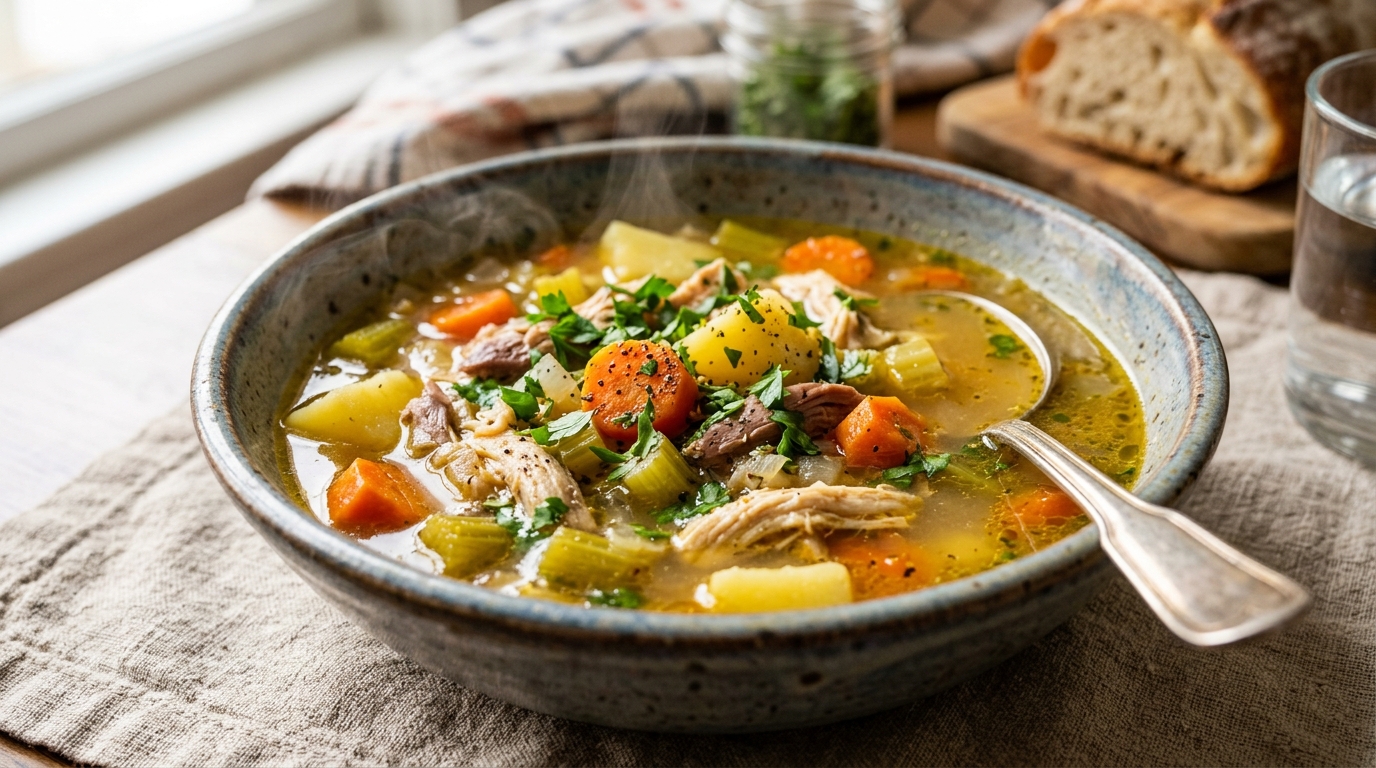
Yes, you can reheat soup, and for most types it’s one of the easier leftovers to deal with. The challenge isn’t the soup itself — it’s the bits in it. A chunky chicken soup has dense pieces of meat and vegetable that heat much more slowly than the broth. A bowl that feels hot on top can still be lukewarm in the middle, and that’s where bacteria stay comfortable. This guide covers every method, and what to watch out for depending on what’s in the bowl.
Can You Reheat Soup?
Yes — and soup is generally safer to reheat than most leftovers because the liquid medium makes it easy to heat evenly all the way through. The rule that matters: bring it to a visible boil, not just steaming. A full boil (100°C) means every part of the soup has reached a temperature that kills any bacteria that may have developed during storage. Stir it while it heats, and check that the solids are hot too, not just the broth. Store soup in the fridge within two hours of cooking, and eat within three to four days.
How to Reheat Soup on the Stovetop
The stovetop is the best method for almost every type of soup. It gives you full control over heat distribution and lets you stir constantly, which matters a lot for thick soups and chowders that sit flat and scorch on the base.
- Pour the soup into a saucepan. If it has thickened in the fridge, add a small splash of water or stock — starchy soups absorb liquid overnight and will scorch before the centre heats through without it.
- Heat on medium, stirring every minute or so. Don’t put the lid on yet — it traps steam and can cause overflow when it reaches the boil.
- Once you see it bubbling actively at the surface and throughout (not just at the edges), it’s done.
- For chunky soups with large pieces of chicken, potato or root vegetable, stir and check a piece in the middle with a fork — it should be hot to the touch all the way through.
Cream-based soups need a little more care — keep the heat lower and stir more frequently. Boiling too hard can break the cream and make it grainy.
How to Reheat Soup in the Microwave
Quick and fine for most soups, as long as you account for the fact that microwaves heat from the outside in. A bowl of soup can be scalding at the edges and cold in the middle if you just run it on full power and assume it’s done.
- Pour into a microwave-safe bowl. Don’t fill it to the top — hot soup expands and soup spills are unpleasant to clean.
- Cover loosely with a microwave-safe lid or plate — this helps heat circulate and stops splatter.
- Heat on full power for 90 seconds, then stop and stir thoroughly. This redistributes the heat from the outer layer down through the middle.
- Heat for another 60–90 seconds, then stir again and taste. If it’s piping hot throughout, it’s ready. If not, another 60 seconds.
For chunky soups, check a larger piece of chicken or vegetable by cutting it and feeling whether the inside is hot. If the broth is boiling but the solids are still warm, give it another minute and stir again.
How to Reheat Soup in a Slow Cooker
This is useful if you’re reheating a large batch for a crowd. It’s not fast — the slow cooker takes 2–3 hours to bring soup up to serving temperature — but it keeps it at a perfect holding temperature for hours without scorching.
- Transfer the soup to the slow cooker and set to High.
- Stir every 30 minutes or so.
- Once it’s bubbling at the edges and hot throughout (usually 2–3 hours), switch to Low or Warm to hold.
Don’t use the slow cooker to reheat soup from frozen — it warms too slowly and spends too long in the temperature danger zone (5–60°C). Defrost in the fridge overnight first.
Can You Reheat Soup From Frozen?
Yes, but defrost it in the fridge overnight first rather than putting frozen soup directly into the microwave or pot. The reason is that a block of frozen soup heats from the outside, so the outer layer reaches a warm temperature and stays there while the centre is still frozen — and bacteria grow in that warm outer layer during the time it takes to heat all the way through. Overnight fridge thawing is slower but keeps the whole portion below 5°C until it’s ready to heat. If you’re in a hurry, a sealed bag submerged in cold water works too — about 30–45 minutes for a standard portion. Once defrosted, reheat by the stovetop method above.
Tips for Reheating Soup Well
- Add liquid before reheating thick soups — lentil, split pea, and potato soups absorb water during storage and go from soup to paste overnight. A small splash of stock or water before heating brings them back.
- Stir cream soups gently — vigorous boiling breaks the emulsion. Medium heat and a gentle stir keeps the texture smooth.
- Don’t reheat noodle or pasta soups with the noodles in — the noodles continue absorbing liquid and go from al dente to mush. Reheat the broth separately and add fresh noodles to the bowl before pouring.
- Check the solids, not just the broth — the broth heats faster than the chunks inside it. A piece of chicken or potato at the centre of the bowl can still be cool when the liquid around it is steaming.
- Two-hour window — if the soup sat at room temperature for more than two hours before refrigerating, it’s safer to bin it. Bacterial growth in warm food is fast.
How Many Times Can You Reheat Soup?
Once. Each time you reheat and cool food, any bacteria present multiply during the warm-to-cool cycle. The first reheat is fine as long as you store it correctly. Reheating a second time significantly increases that bacterial load, and the risk isn’t worth it. If you’ve made a large batch, the smarter move is to portion it into individual containers before it goes in the fridge — take out what you need each time rather than reheating and re-cooling the whole pot.
Which Method Is Best for Reheating Soup?
| Method | Time | Result | Best For |
|---|---|---|---|
| Stovetop | 5–8 min | Even, full boil, full control | All soup types, especially chunky |
| Microwave | 3–4 min | Good if stirred halfway | Single portions, smooth soups |
| Slow cooker | 2–3 hrs | Gentle, no scorching | Large batches, holding temperature |
Related Articles
- Can You Reheat Noodle Soup?
- Can You Reheat Casserole?
- Can You Reheat Chicken?
- Can You Reheat Food Twice?
- Can You Reheat Dahl?
- Can You Reheat Corn on the Cob?