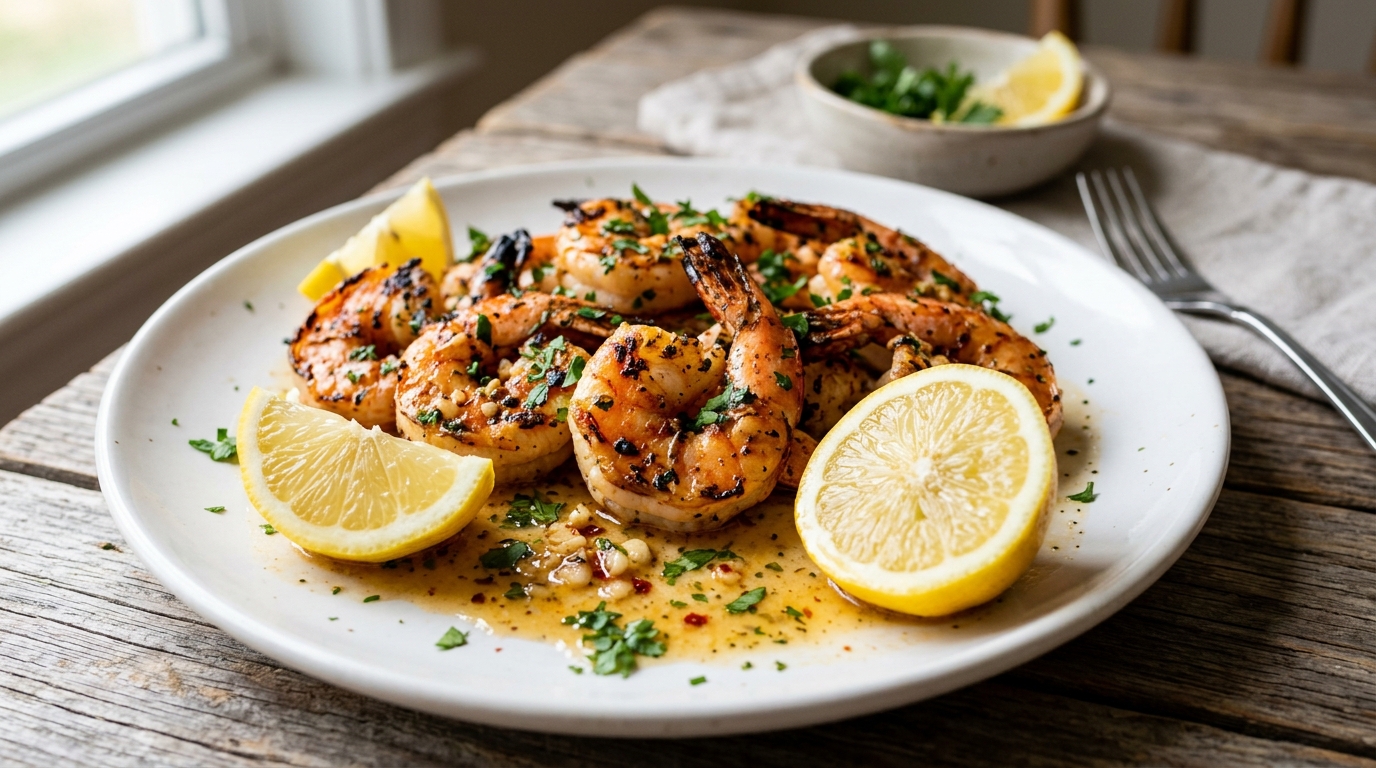
Yes, you can reheat shrimp, but the margin between hot and overcooked is smaller than with almost any other protein. Shrimp are tiny, they conduct heat rapidly, and their muscle fibres tighten quickly above a certain temperature. The rule is simple: less time than you think, and gentler heat than feels natural.
Can You Reheat Shrimp?
Yes. Cooked shrimp keeps in the fridge for three to four days in a sealed container. Refrigerate within one hour of cooking: shrimp is a higher-risk shellfish and should not sit at room temperature. Reheat to 63°C (145°F) throughout and do not reheat more than once. Shrimp that smells strongly of ammonia before reheating should be discarded, not salvaged.
Why Shrimp Goes Rubbery
Shrimp muscle is almost entirely fast-twitch fibres with very little connective tissue. These fibres tighten rapidly when heated and have no collagen to break down and soften the texture with extended cooking (the way tough cuts of meat improve with slow heat). Every degree above the shrimp’s initial cooking temperature makes it firmer and drier. Reheating effectively means raising the internal temperature just enough to be hot throughout, then stopping immediately.
Reheating Shrimp on the Stovetop
The best method for plain shrimp or shrimp with a light marinade.
- Heat a pan over medium-low heat with a small amount of butter or oil.
- Add the shrimp in a single layer. Do not crowd the pan.
- Heat for one minute, then flip each shrimp.
- Heat for another 30 to 60 seconds. The shrimp should be warm throughout but not sizzling.
- Remove from heat immediately. They continue to cook from residual heat for another 30 seconds.
Adding a splash of white wine, lemon juice, or broth to the pan in the last 30 seconds adds moisture and a small amount of steam, which helps the interior warm without the exterior overcooking.
Reheating Shrimp in the Microwave
Acceptable for shrimp in a dish (pasta, rice, stir-fry) where surrounding food moderates the heat. Not ideal for plain shrimp.
- Place in a microwave-safe bowl.
- Cover with a damp paper towel.
- Microwave at 50% power for 30 seconds.
- Check: the shrimp should be barely warm. Add 15-second bursts if needed.
- Stop as soon as they are hot throughout.
Reheating Shrimp in the Oven
Better for larger quantities or shrimp in a sauce.
- Preheat to 150°C (300°F).
- Place shrimp in an oven-safe dish with a tablespoon of butter or sauce.
- Cover with foil.
- Heat for six to eight minutes only. Check at six minutes.
Which Method Should You Use?
| Method | Time | Result | Best For |
|---|---|---|---|
| Stovetop (medium-low) | 90 sec | Best texture control | Plain shrimp, small portions |
| Microwave (50% power) | 30-60 sec | Acceptable in dishes | Shrimp in rice, pasta, stir-fry |
| Oven (150°C, foil) | 6-8 min | Even, hands-free | Larger batches, sauced shrimp |
Q: I’ve been told that I cannot reheat shrimp after it has been cooked. Is that true? What is the safest way, if any, to reheat my shrimp?
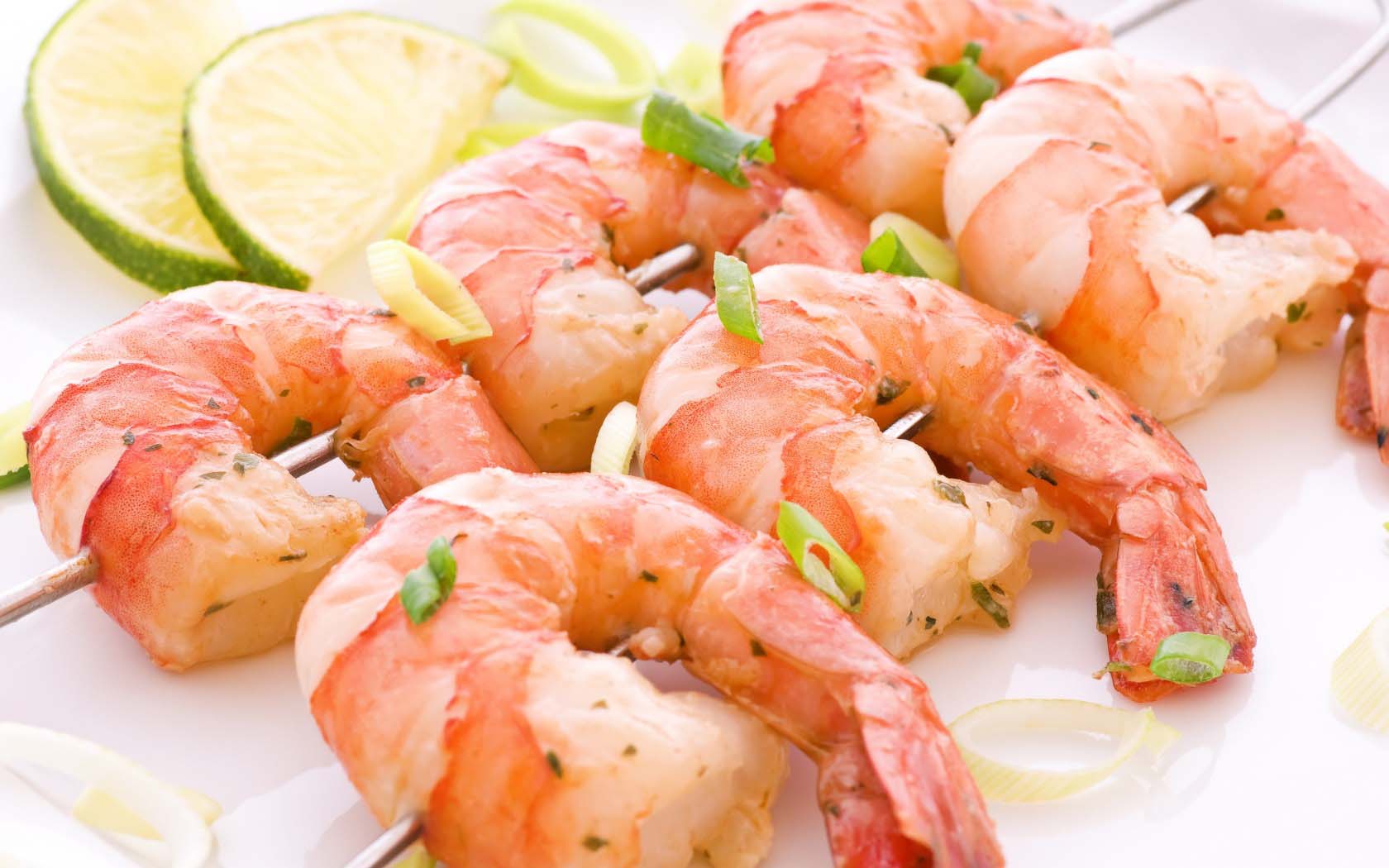
A: Reheating shrimp is very common and is not something that should be feared at all! Many dishes feature shrimp in them, so it is a good thing we can use a variety of methods to reheat them!
The Microwave
By far the most common way to reheat shrimp, the microwave is ideal if you are reheating a meal in total. Say you bought shrimp scampi, simply add a splash of water (you can even use milk to make it creamier) to the noodles in a microwave safe dish. Microwave for two minutes, stir, and continue heating in 30-second increments until everything is warmed through.
The Skillet Method
Using the stovetop is the best way to reheat shrimp if they do not have anything with them. If you have separated the shrimp from a dish or say ordered grilled shrimp, the skillet will ensure, they keep their texture without getting mushy.
Add oil to the pan, about two tablespoons, then add the shrimp. Cook the shrimp for two to three minutes per side. They will cook quickly so be sure to keep an eye on them!
The Oven Method
There will be times when shrimp will come breaded, in that case, the oven will help ensure they do not get soggy in the cooking process. Not to mention, the oven is a very easy way to reheat just about anything!
To reheat your breaded shrimp, make a pouch of aluminum foil and loosely wrap the shrimp in it. Preheat your oven to 300 degrees F, and then cook for about 15 minutes. Half way through cooking, check their progress and adjust accordingly. If you notice they are not crispy, allow the foil to vent.
The Steaming Method
There is just something about cocktail shrimp that makes many people squeamish. Instead of eating them chilled, you can steam them and have no loss of flavor. You can also steam other shrimp types, using this method as long as they are not breaded.
Fill a double boiler and bring the water to a boil. Add your shrimp, just make sure the steam can rise around them, so do not layer them too high. Steam your shrimp until you can smell them, about five minutes, depending on how many are in the pot.
Shrimp is a very easy dish or component to reheat, and it is safe. Now there is no reason to eat your seafood cold ever again. With these methods, you can bring your cold dish back to its delicious warm state! Enjoy!
I’m amazed that there’s a website strictly dedicated to reheating shrimp
It’s clearly a site about reheating anything at all.