
Whether you can reheat yoghurt depends on what you’re trying to achieve. Warming yoghurt gently to take the chill off works fine. Heating it to high temperatures or adding it cold to a hot dish causes it to separate and curdle, leaving a grainy, watery result. The chemistry behind this shapes every method.
What Happens When You Heat Yoghurt
Yoghurt is a colloid: a network of milk proteins (mainly casein) held in suspension with water and fat, stabilized by lactic acid from fermentation. When heated above about 50 to 60°C, two things happen. First, the protein network begins to denature and contract, squeezing out water. Second, the proteins start to clump together, forming the grainy curds you see in separated yoghurt. This is the same process that makes strained yoghurt thicker, except in cooking it happens unevenly and rapidly.
The live bacterial cultures in yoghurt also die above about 46°C, though this doesn’t affect the taste or safety of the yoghurt. If you’re eating yoghurt for its probiotic content, heating it above that point removes the benefit.
Can You Reheat Yoghurt?
Yes, at low temperatures. Yoghurt that has been refrigerated can be gently warmed to room temperature or slightly above without separating. The key is keeping the temperature below 50°C and heating slowly. Yoghurt used as an ingredient in cooking (curries, marinades, sauces) requires specific technique to prevent curdling.
Warming Yoghurt Gently
For eating as-is, or using as a topping for warm dishes:
- Take the yoghurt out of the fridge 20 to 30 minutes before you need it. At room temperature it loses the chill without any heat application at all.
- If you want it slightly warmer, place the container in a bowl of warm (not hot) water for five minutes. This is the gentlest method.
- Microwave: 15 seconds at 50% power, stir, check. Repeat once if needed. Do not exceed 30 total seconds or you risk the outer layer starting to separate.
Using Yoghurt in Hot Dishes Without Curdling
This is where most people go wrong. Adding cold yoghurt directly to a hot curry or sauce causes instant curdling at the point of contact. The solution is tempering:
- Remove the hot dish from the heat first, or reduce to the lowest setting.
- Stir a tablespoon of the hot liquid from the dish into the yoghurt, mixing well. This raises the yoghurt’s temperature gradually.
- Add another tablespoon, mix again.
- Now stir the tempered yoghurt into the dish. Do not return to high heat.
Full-fat yoghurt curdles less readily than low-fat because the fat moderates the protein behaviour. Greek yoghurt, being strained and higher in protein, actually holds up better in cooking than standard yoghurt despite its higher protein content, because the straining removes some of the whey that would otherwise separate.
Can You Reheat a Dish That Contains Yoghurt?
With care. Dishes where yoghurt was stirred in at the end (raita, some marinades, some curries) will separate on reheating if you use high heat. The workaround:
- Reheat the dish gently over low heat, stirring frequently
- If it starts to separate, remove from heat immediately and stir vigorously. It often comes back together with agitation
- Adding a teaspoon of cornflour mixed with a tablespoon of cold water before reheating stabilises the yoghurt and prevents separation
Which Method Should You Use?
| Situation | Method | Max Temp |
|---|---|---|
| Eating plain, take chill off | Room temp or warm water bath | Below 50°C |
| Quick warm in microwave | 50% power, 15 sec bursts | Below 50°C |
| Adding to hot dish | Temper first, then stir in off heat | Avoid direct high heat |
| Reheating dish with yoghurt | Low heat, stir constantly, cornflour trick | Keep below simmer |
Q: Yogurt is my favorite thing and has been as a child, but recently I have not been able to eat anything remotely cold. Is there a way to heat yogurt so I can enjoy it once more?
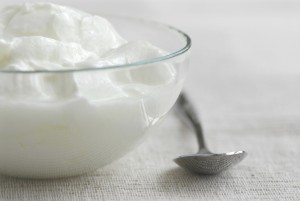
A: Sadly, no, there is no way to reheat yogurt. There are several reasons as to why you should not heat it. However, you can eat it at room temperature.
Why You Should Not Reheat Yogurt
Reheating any dairy product tends to make it spoil. This means your yogurt will curdle and separate! If your aim is to make ricotta cheese, then you are on a great start. Otherwise, it can make you sick.
The other reason to avoid heating yogurt is because most commercial brands have probiotics and active cultures added into the mix. If they go over 110 degrees (which is pretty easy to achieve in a few seconds), they will die and no longer give you the benefits of good bacteria. Your digestive track needs these cultures so you should avoid heating yogurt.
While we get gyros with a yogurt sauce, it is a different mix entirely and requires other ingredients! Therefore, your Yoplait yogurt should remain refrigerated until ready to eat. If you cannot eat it chilled, you can let it get room temperature, just be sure to keep the rest chilled until use.
I’m not aware of any bacteria that can not tolerate 110 degF …. Maybe you can educate me…
Standard ‘kitchen practice ‘ is: to kill most bacteria takes a temp of 140 degF ,
quite a bit hotter than 110 !
and further recommendations push that 140 up to 165 for certain foods, such as chicken ..
The ‘rule of thumb’ is this: the ‘risky zone ‘ where bacteria can flourish is the range of 40degF to 140degF : we minimize food exposure to that range.
to show how ‘mild’ a temp of 110 is, observe that only a portion of germs will survive 110 Let’s say the ” LD50 ” ( the temp where 50% of germs find the temp lethal) is 110 .. Well lots of humans have experienced high temp’s in serious illness: say 106degF … so much of one’s intestinal bacteria would die in such patients? I doubt that very much!
Here’s a good article:
https://www.nytimes.com/2015/06/09/science/is-that-water-hot-enough-to-kill-germs.html
It also shows the “FDA guide for handwashing:
I would consider accepting a 110deg experience for bacteria and viruses as treating them to a wonderful ‘day at the beach’, complete with picnic!
Hope it helps!