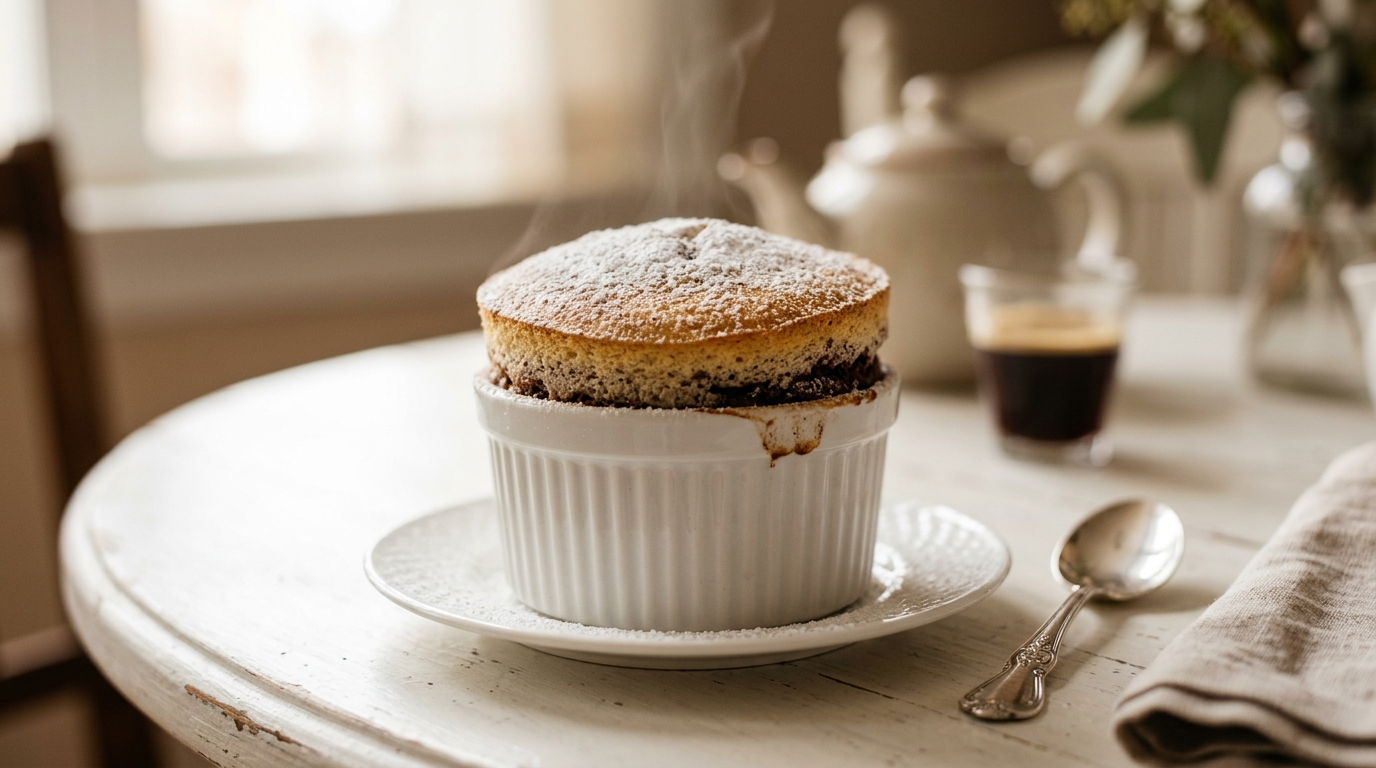
 chocolate soufflé in a white ramekin with powdered sugar on an elegant white table” loading=”lazy” />
Technically yes, you can reheat a souffle, but with one important expectation to set: it will not rise again. A freshly baked souffle rises because hot air expands the beaten egg whites into a foam that the heat of the oven then sets partially. Once cooled, that structure collapses permanently. Reheating warms the interior and produces something dense and custardy, like a baked egg custard, which is a genuinely good result if you go in expecting it rather than hoping for a second rise.
Can You Reheat a Souffle?
Yes, within the food safety window. A baked souffle keeps in the fridge for up to two days, covered loosely. It should be refrigerated within two hours of baking. Reheat to 75°C (165°F) throughout. Cheese souffles and chocolate souffles both reheat reasonably well. Fruit souffles that rely heavily on fresh puree are the least successful because the delicate flavour compounds change on a second exposure to heat.
What to Expect
The reheated souffle will be:
- Smaller and denser than when first baked
- Uniformly set throughout rather than having a liquid centre
- Closer in texture to a flourless chocolate cake (for sweet souffles) or a thick savoury custard (for cheese souffles)
- Good, but not the same dish as when it came out of the oven the first time
Reheating a Souffle in the Oven
The only method worth using. The microwave makes a souffle rubbery and unpleasant.
- Preheat the oven to 160°C (320°F).
- Leave the souffle in its original ramekin or dish.
- Cover loosely with foil.
- Heat for eight to ten minutes for individual ramekins, or twelve to fifteen minutes for a large souffle dish.
- Remove the foil for the final two minutes to allow the surface to dry slightly.
- Serve immediately: a reheated souffle will not hold as long as a fresh one.
Using Fallen Souffle as an Ingredient
A fallen cheese souffle is an excellent base for other dishes. Cut into slices and pan-fry in butter: the exterior crisps while the interior remains custardy and rich. A fallen chocolate souffle can be warmed gently and served with cream as a dense chocolate pudding. Both approaches reframe the leftover rather than trying to restore the original.
Which Method Should You Use?
| Method | Time | Result |
|---|---|---|
| Oven (160°C, foil) | 8-15 min | Dense, custardy, good |
| Pan-fried (sliced, in butter) | 2-3 min per side | Crispy outside, custardy inside |
| Microwave | 60 sec | Rubbery, avoid |
Q: I am really trying to impress my mother-in-law when they come over next weekend. The problem is that I work a double on Friday and just won’t have the energy to do anything when they get here. Can I make a soufflé ahead of time and just reheat it when they come over?

A: Soufflés should not be reheated due to deflating and becoming dense.
What Makes A Soufflé a Soufflé?
The signature mark of a great soufflé is a towering cake. Most chefs fear these dishes as a soufflé waits for no one! Typically, you need to pop it into the oven right away and serve while still hot. If left to cool, it will deflate quickly, and become rock hard if given time. While this is no way to impress a guest, it is an important lesson to learn as you will be able to nitpick your recipe for next time.
Did your soufflé deflate? Not a problem, they are supposed to. Steam allows the cake to rise, so when removed from heat, it will naturally fall. With that worry out of the way, you can find easy recipes online that are a snap to put together.