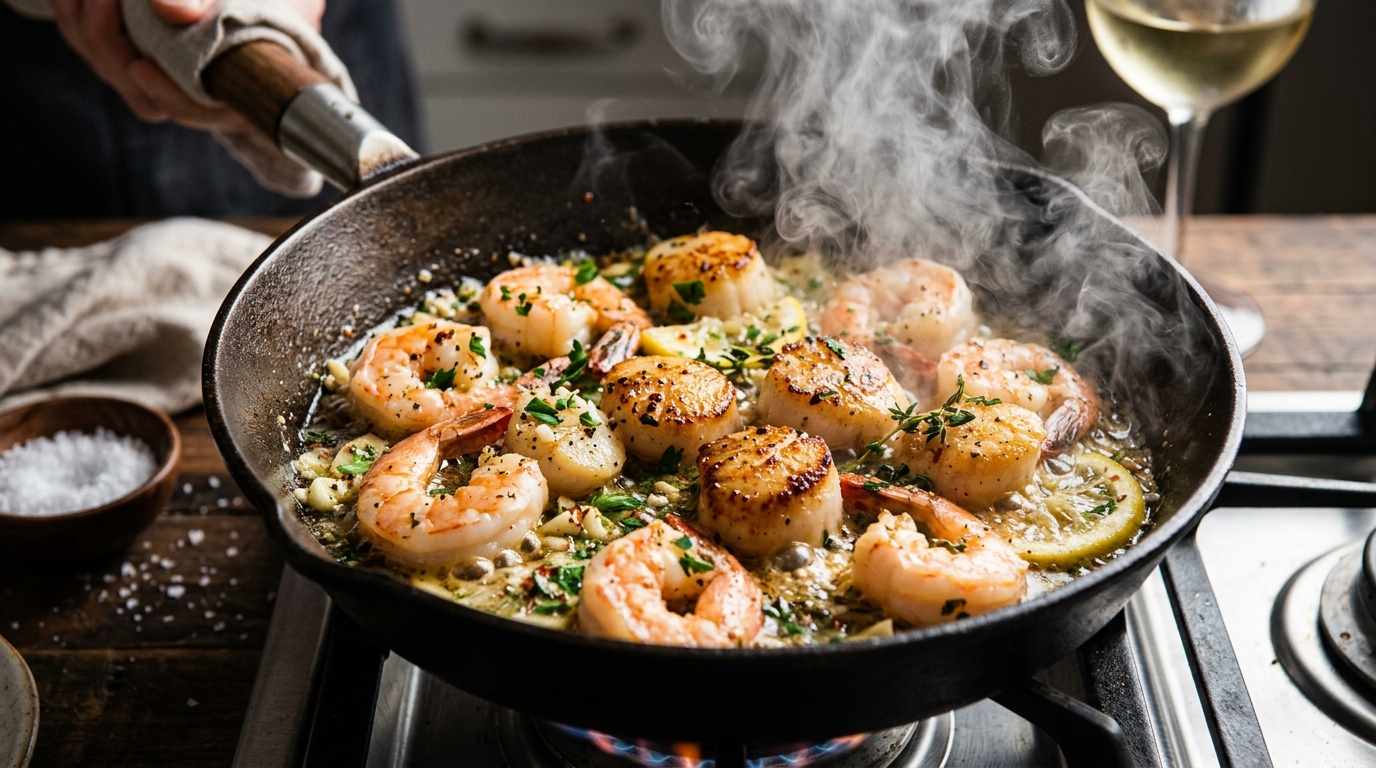
Yes, most cooked seafood can be reheated, and the result can be genuinely good if you use the right method. The reputation reheated seafood has for being rubbery or smelling strong comes from one mistake: too much heat. Seafood proteins cook at lower temperatures than meat, and they continue to firm up and tighten with every degree of heat above that point. The goal when reheating is to warm through rather than cook again.
Can You Reheat Seafood?
Yes, with conditions. Cooked seafood keeps in the fridge for two to three days in a sealed container. It should reach 75°C (165°F) throughout when reheated, but the path to that temperature should be gentle. There are two exceptions where reheating is not recommended:
- Raw shellfish that were cooked then partially chilled and left out: shellfish are high-risk and should be refrigerated within one hour
- Mussels, oysters, clams, and other bivalves: these are fine to eat cold or in a sauce, but reheating tends to make them tough and the shells can trap steam unevenly. Many cooks skip the reheat and incorporate them into a new dish instead
Why Reheated Seafood Smells Stronger
Fish and shellfish contain a compound called trimethylamine oxide (TMAO). As seafood ages and when exposed to heat, TMAO breaks down into trimethylamine (TMA), which is responsible for the sharp, ammonia-like “fishy” smell. High heat accelerates this process dramatically. Low, gentle reheating minimises the breakdown and keeps the smell much closer to fresh-cooked. This is why oven reheating at a moderate temperature produces far better results than a minute in a hot microwave.
Reheating Seafood in the Oven
The most reliable method for whole fillets, prawns, scallops, and mixed seafood dishes.
- Take the seafood out of the fridge 10 minutes before reheating. Starting from closer to room temperature means less time in the oven and less risk of overcooking the outside before the centre is warm.
- Preheat the oven to 130°C (265°F). This is lower than you might expect, but seafood needs gentle heat.
- Place in an oven-safe dish. Add a tablespoon of water, white wine, or fish stock to the dish to create steam, then cover tightly with foil.
- Heat for 10 to 15 minutes for fillets, or eight to ten minutes for prawns and smaller pieces. The seafood should be just warm throughout, not sizzling.
Reheating Seafood on the Stovetop
Best for prawns, squid, and mixed seafood dishes in a sauce or with other ingredients.
- Heat a pan over medium-low heat with a small amount of butter or oil.
- Add the seafood and heat gently, turning once. For prawns, one to two minutes per side is enough. For scallops, the same.
- Remove from heat as soon as it is hot throughout. Overcooking by even 30 seconds makes a noticeable difference in texture.
Seafood in a sauce reheats well on the stovetop: the sauce provides moisture and distributes heat more evenly than a dry pan. Heat the sauce first, then add the seafood and stir gently for one to two minutes.
Reheating Seafood in the Microwave
Not recommended for plain fillets, but acceptable for seafood in rice, pasta, or sauce where the surrounding food moderates the heat.
- If you must use the microwave for plain seafood: 50% power, 30 seconds at a time, covered with a damp paper towel
- Never use full power: it creates hot spots that overcook sections while others stay cold
- The smell will be more pronounced with microwave reheating than with oven or stovetop
Which Method Should You Use?
| Seafood Type | Best Method | Time | Notes |
|---|---|---|---|
| Fish fillets | Oven 130°C, covered | 10-15 min | Add splash of water/wine |
| Prawns/shrimp | Stovetop medium-low | 1-2 min | Watch closely, turns rubbery fast |
| Scallops | Stovetop or oven | 2-3 min | Low heat, gentle |
| Seafood in sauce/rice | Stovetop or microwave | 3-4 min | Sauce protects from direct heat |
Q: My family and I just had the most delicious dinner at our local seafood restaurant, but we have so many leftovers! I have never had to reheat seafood, what is the best method? Is it even safe?

A: Reheating seafood is easy, delicious, and safe. One of the main things to remember when reheating seafood is to ensure the internal temperature gets to 165 degrees Fahrenheit. Reheating your leftovers is easy, and quick too, depending on what you are making.
The Oven
Most people think to put their leftovers in the oven, and for good reason! Not only is this a great way to know it is being cooked all around, it is easier to get an even heat rather than on a stovetop.
To reheat using your oven, simply take a casserole dish and spray it with a nonstick spray, olive oil, or butter. The main reason you are greasing the pan is to make sure nothing sticks, why lose half your meal to your dish? After that, simply place your leftover in the dish and pop it into a 325 degree oven.
Be sure to flip it halfway through to ensure even cooking. Because there are so many variations of seafood, keep an eye on it since some pieces may cook faster than others, especially if it were thin or small.
The Stove Top Method
Some people would rather not warm up their house with the use of their oven, and that is understandable. Instead, you can opt for the stove top method which is just as easy and quick.
To reheat using your stove top, simply add a little butter or oil to coat the bottom and let it warm over medium heat. Once the butter has melted, or your oil is warm, add your leftovers.
Flip your leftovers as to ensure one side does not get burned. You want to keep a close eye on the pan because you can overcook your seafood very quickly in a skillet!
Seafood is great year round, and being able to reheat it is a valuable asset in any cook’s arsenal. Seafood is nothing that should be enjoyed only one night, instead, make enough for leftovers. In gumbos and many other seafood dishes, the flavors are better the second day too!
What method works for you? Do you have any tips when it comes to reheating seafood?
8 Responses to “Can You Reheat Seafood?”
Read below or add a comment...
Trackbacks
[…] Can You Reheat Seafood? […]
[…] Can You Reheat Seafood? […]
[…] Can You Reheat Seafood? […]
[…] Can You Reheat Seafood? […]
[…] Can You Reheat Seafood? […]
[…] Can You Reheat Seafood? […]
[…] Plain quinoa without added meat or seafood carries a lower bacterial risk than rice, but the texture degrades noticeably after a second reheat […]
[…] reheat more than once. Plain noodles are lower risk than noodle dishes containing meat or seafood, which should be reheated with the same care as the protein […]