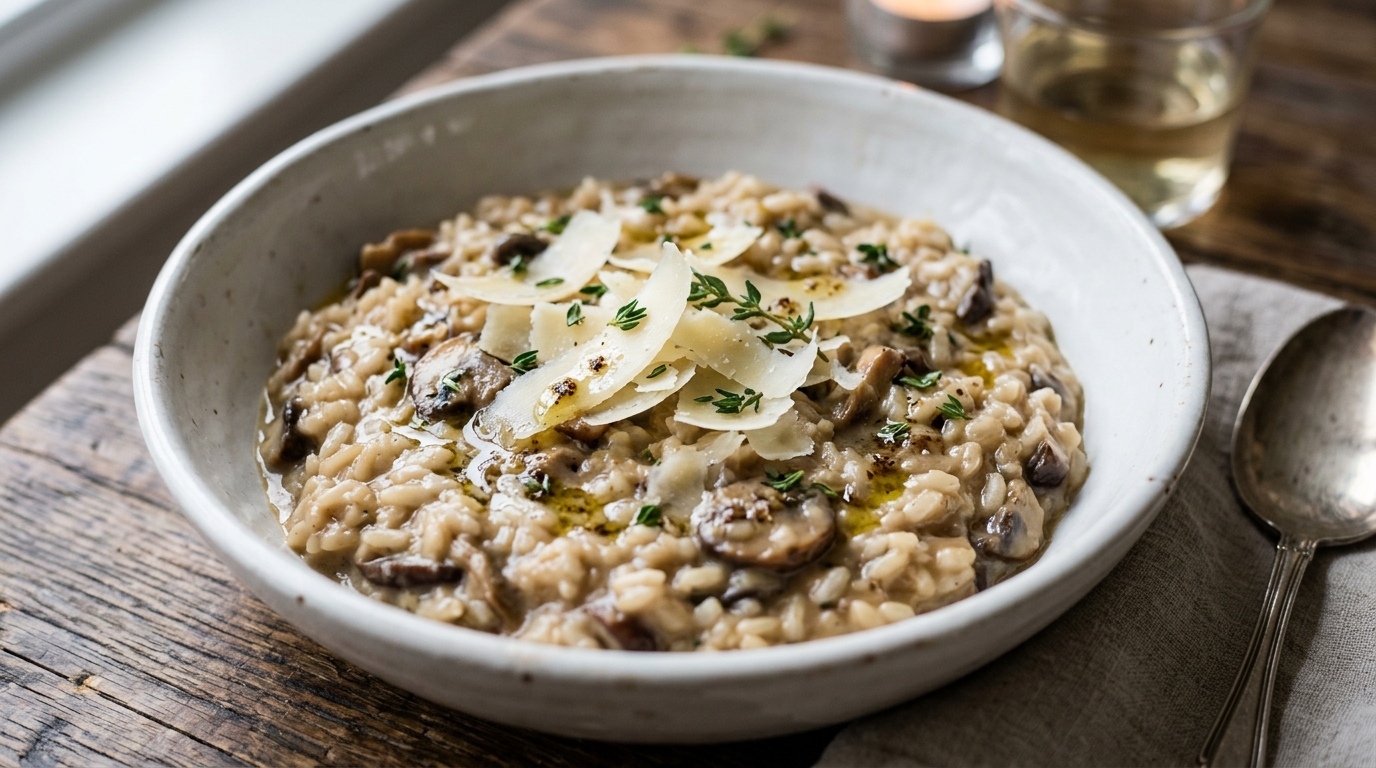
 mushroom risotto in a white bowl with shaved parmesan and fresh thyme” loading=”lazy” />
Yes, you can reheat risotto, and it can come back remarkably close to the original if you treat it like a cooking process rather than just a warming exercise. Cold risotto sets into a dense, starchy block. The method for reversing that is simple: warm stock, constant stirring, and enough patience to let the starch loosen gradually.
Can You Reheat Risotto?
Yes. Cooked risotto keeps in the fridge for three to four days in a sealed container. Like rice, arborio and carnaroli contain starch that can harbour Bacillus cereus spores, so the usual rules apply: refrigerate within two hours of cooking, reheat to 75°C (165°F) throughout, and reheat once only. Seafood risotto should be treated with extra care given the higher food safety risk of the protein component.
Why Risotto Sets Firm in the Fridge
Risotto gets its creamy texture from starch released during the slow cooking of arborio rice. As it cools, those starches retrograde: they crystallise and firm up, binding the grains together and absorbing remaining liquid. This is the same process that makes cold rice firm, but more pronounced in risotto because the starch concentration in the cooking liquid is much higher. Reheating reverses this by re-melting the crystallised starch, but only if you add liquid: without it, the starch firms further rather than loosening.
Reheating Risotto on the Stovetop
The best method, and the only one that truly recreates the original texture.
- Warm a portion of stock (chicken, vegetable, or the same type used to make the risotto) in a small saucepan or in the microwave until hot.
- Add the cold risotto to a wide pan over medium-low heat.
- Add two to three tablespoons of warm stock per cup of risotto. Do not use cold stock: cold liquid shocks the starch and makes it seize further rather than loosen.
- Stir continuously as the risotto warms. After one to two minutes it will begin to loosen and take on the glossy, fluid consistency of fresh risotto.
- If too thick, add another splash of stock and stir. If too thin, keep heating with the pan uncovered.
- Add a knob of butter and a grating of parmesan in the last 30 seconds, stir vigorously to incorporate. This step, called mantecatura, restores the creamy finish.
Reheating Risotto in the Microwave
Quicker but produces a less consistent texture. Acceptable for lunch when you don’t want to stand over a pan.
- Transfer to a microwave-safe bowl and add two tablespoons of stock or water per serving.
- Stir the liquid through before heating.
- Cover loosely and microwave on full power for 90 seconds.
- Stir thoroughly mid-way through and again at the end. The stirring redistributes heat and helps re-emulsify the starch.
- Add 30-second bursts if needed until hot throughout.
The Arancini Alternative
Cold risotto shapes and fries better than fresh risotto because the firm, set starch holds the shape through the breadcrumbing and frying process. If you have leftover risotto you’re not sure about reheating, rolling it into arancini (risotto balls), coating in breadcrumbs, and pan-frying is a better use of it than attempting a second reheat of already-reheated risotto.
Which Method Should You Use?
| Method | Time | Result | Best For |
|---|---|---|---|
| Stovetop (warm stock, stir) | 4-5 min | Creamy, like fresh | Best result, worth the effort |
| Microwave (with stock, stir) | 90 sec | Good, slightly less even | Quick lunches, acceptable result |
| Repurpose as arancini | 10 min | Crispy, different dish | Older leftovers, creative option |
Q: After many years of schooling, I have yet to make risotto. I plan on making it this weekend, however, the recipe I have is for a fairly large serving. For just me, it would have a few nights worth of leftovers. Is there any way to reheat this leftover risotto?
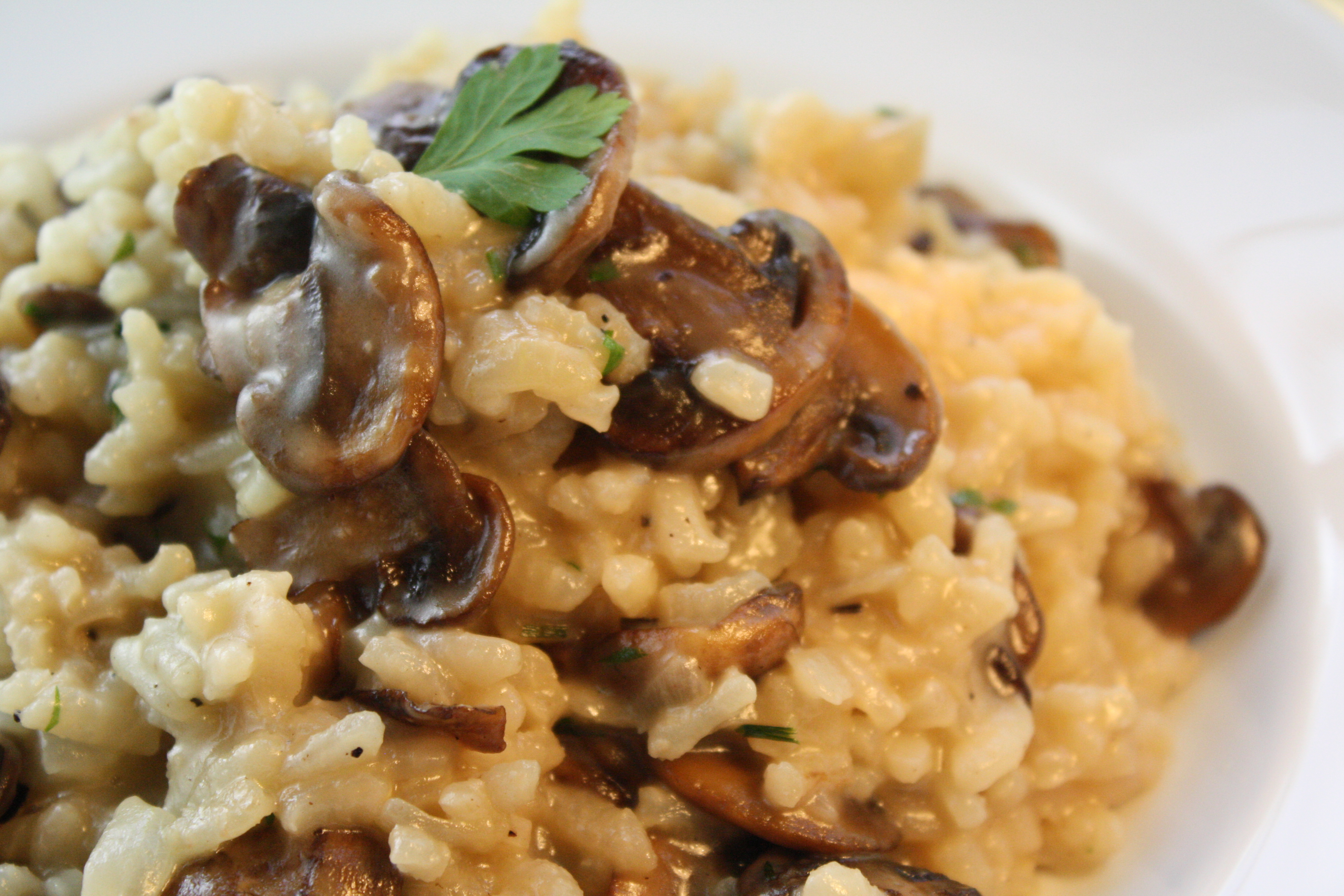
A: While there are a few ways to reheat risotto, the results are not what you are hoping for. The original meal is rich and creamy, yet even with the best attempts at reheating, it will be mushy and dry. Therefore, you should eat as much of the risotto as you can the night you make it, or try to scale back the recipe.
As a general warning, you should never eat the reheated leftovers of a meal that has made you sick, or has been left at room temperature for more than an hour. Spores called Bacillus cereus exist on rice grains and are able to survive after your food is cooked, which may cause food poisoning! There is more risk with risotto as it must be cooked low and slow until completion. The creamy aspect of the rice is another contributing factor as it is a medium for bacteria to feed on.
Bottom line, eat your risotto on day one, and then throw the rest out! There is no reason to get sick from a delicious dinner from the night before!
I completely disagree. I love reheating risotto and eating it the second day. In the microwave is fine if you are taking it to work for lunch, but the best way is reheated in a frying pan with a little bit of olive oil. It gets a little crisp on the edges. Another alternative is to use the leftover rice to make fritters or arancini. DO NOT THROW AWAY LEFTOVER RISOTTO!