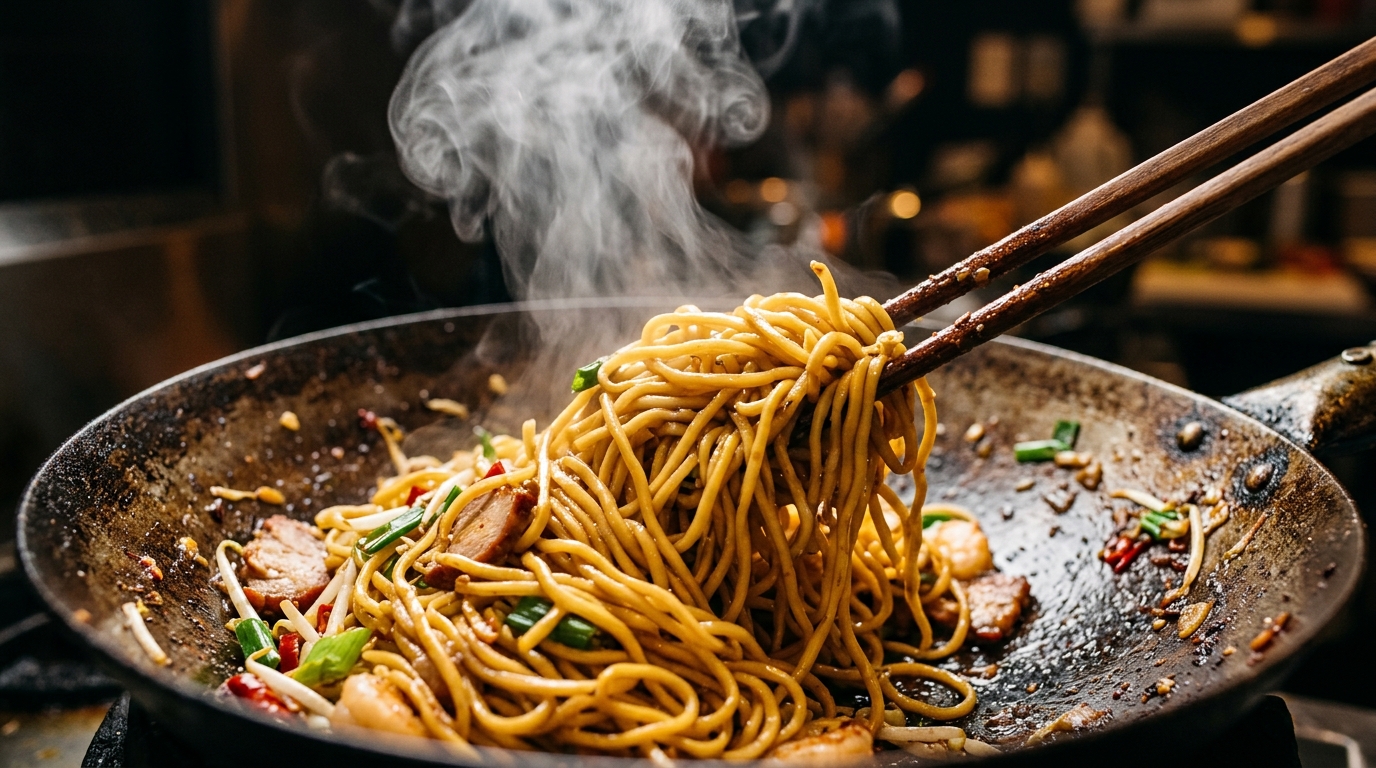
Yes, you can reheat noodles. The challenge is that noodles absorb liquid as they sit, leaving them clumped, dry, and slightly stodgy by the time they come out of the fridge. The fix isn’t complicated: add moisture back before applying heat, and use a gentle method. Most reheating failures with noodles come from skipping that first step.
Can You Reheat Noodles?
Yes, safely. Cooked noodles keep for three to four days in the fridge in a sealed container. The food safety rules are the same as for any cooked grain or pasta: refrigerate within two hours of cooking, reheat to 75°C (165°F) throughout, and don’t reheat more than once. Plain noodles are lower risk than noodle dishes containing meat or seafood, which should be reheated with the same care as the protein itself.
Does the Noodle Type Matter?
Yes, noticeably. Different noodle types respond differently to reheating:
| Noodle Type | Texture After Reheating | Best Method |
|---|---|---|
| Egg noodles (ramen, lo mein) | Holds up well, slight softening | Stovetop or microwave |
| Rice noodles | Sticky, clump together easily | Stovetop with water or broth |
| Glass noodles (bean thread) | Absorbs liquid well, easy to reheat | Any method with added liquid |
| Udon | Thick and dense, reheats slowly | Stovetop or boiling water briefly |
Reheating Noodles on the Stovetop
The best method for most noodle types, particularly anything dry or clumped. Adding liquid directly to the pan rehydrates as it heats.
- Put the noodles in a pan or wok over medium heat.
- Add two to three tablespoons of water, broth, or sauce per serving. For plain noodles, water works; for flavoured dishes, use the same broth or sauce they were cooked with.
- Stir and toss continuously to separate the noodles and distribute the heat evenly.
- Heat for three to four minutes until the liquid is absorbed and the noodles are hot throughout.
- If they look dry before they’re fully hot, add another splash of liquid and continue.
A wok over high heat works particularly well for fried noodle dishes, where the goal is also to restore some of the original char and texture rather than just warming through.
Reheating Noodles in the Microwave
Quick and effective for plain or sauced noodles, less good for dishes where texture matters.
- Place noodles in a microwave-safe bowl and break up any large clumps.
- Sprinkle one to two tablespoons of water over the top and toss lightly.
- Cover with a damp paper towel or a microwave-safe lid placed loosely.
- Heat on full power for 60 to 90 seconds per serving.
- Stir, check the temperature, and add 30-second bursts as needed until hot throughout.
The damp paper towel is the detail that makes the difference. It creates a mini steam environment inside the bowl, which prevents the noodles from drying out and helps loosen any clumps during heating.
Reheating Noodles by Blanching
The fastest reset for any noodle type, and the one that best restores original texture. Particularly good for rice noodles, udon, and plain noodles you’re going to add to a dish.
- Bring a pot of water to the boil.
- Drop the noodles in for 30 to 60 seconds, stirring immediately to separate them.
- Drain thoroughly and use immediately. Don’t leave them sitting in the water.
This method works best for noodles that will be finished in a sauce or broth. It’s not ideal for standalone reheating because you lose any seasoning along with the cooking water.
How to Stop Noodles Clumping in the Fridge
- Toss with a small amount of oil before refrigerating: a teaspoon of sesame oil or neutral oil prevents noodles sticking together and makes reheating much easier
- Store separately from sauce where possible: noodles stored in sauce absorb it overnight and become soft; keeping them separate lets you control the texture on reheating
- Store in a flat layer in the container rather than piled up: it’s easier to break them apart when reheating
How Many Times Can You Reheat Noodles?
Once for plain noodles; strictly once for noodle dishes containing meat, seafood, or eggs. Plain cooked noodles are low-risk enough that a second reheat won’t cause food safety issues, but the texture will have degraded significantly by that point. At that stage, they’re better used as an ingredient in a fried noodle dish where a softer texture is less noticeable.
Which Method Should You Use?
| Method | Time | Result | Best For |
|---|---|---|---|
| Stovetop (with liquid) | 3-5 min | Best texture, even heat | All noodle types, fried dishes |
| Blanching (boiling water) | 1-2 min | Best texture reset | Plain noodles, udon, rice noodles |
| Microwave (damp towel) | 2-3 min | Good, slightly softer | Sauced dishes, quick meals |
Q: I made spaghetti last night, and my family did not eat all of the noodles. Is there a way I can reheat them so I can take pasta for lunch? The noodles are plain.

A: There is a simple, fast way to reheat leftover noodles, and it can be done in less than a two minutes in your microwave.
The Microwave Method
Having leftovers can be a boon, as long as you know how to reheat them. If your noodles are plain, simply add two tablespoons of water to the container (microwave safe) and slosh it around some. From there, pop it into the microwave, covered, but allowed to vent, for 30 seconds.
Stir after 30 seconds, and continue heating for an additional 30 seconds and stir again. Repeat if warmer food is desired.
Noodles With Sauces
Depending on your sauce, you can add milk for cream based, and water for tomato. A simple splash of liquid will allow your noodles to unclump and warm more evenly.
Making enough for leftovers is great, and is an effective way to ensure that you have delicious meals the day after. Be sure you use microwave safe containers if you are using Tupperware!
11 Responses to “Can You Reheat Noodles?”
Read below or add a comment...
Trackbacks
[…] Can You Reheat Noodles? […]
[…] Can You Reheat Noodles? […]
[…] Can You Reheat Noodles? […]
[…] frequently and distribute the sauce equally around the dish. You don’t want to overcook the noodles or dry up the sauce. If your carbonara begins to fry or brown, remove the dish from the heat and […]
[…] for prawns in a dish (pasta, rice, curry) where surrounding food moderates the heat. For plain prawns, the microwave creates […]
[…] shrimp scampi, simply add a splash of water (you can even use milk to make it creamier) to the noodles in a microwave safe dish. Microwave for two minutes, stir, and continue heating in 30-second […]
[…] You have the option of heating the cheese directly on the skillet to create a dip or adding it to pasta or cheese sandwiches. Start by letting your cheese sit out until it’s reached room […]
[…] quality to the strands. It’s the best approach if you’re serving the squash as a pasta substitute where texture […]
[…] Faster but less even. Acceptable for crab meat out of the shell (in a crab cake, crab dip, or pasta). […]
[…] Can You Reheat Noodles? […]
[…] recommended for plain fillets, but acceptable for fish in a rice bowl, pasta, or similar dish where the surrounding food moderates the […]