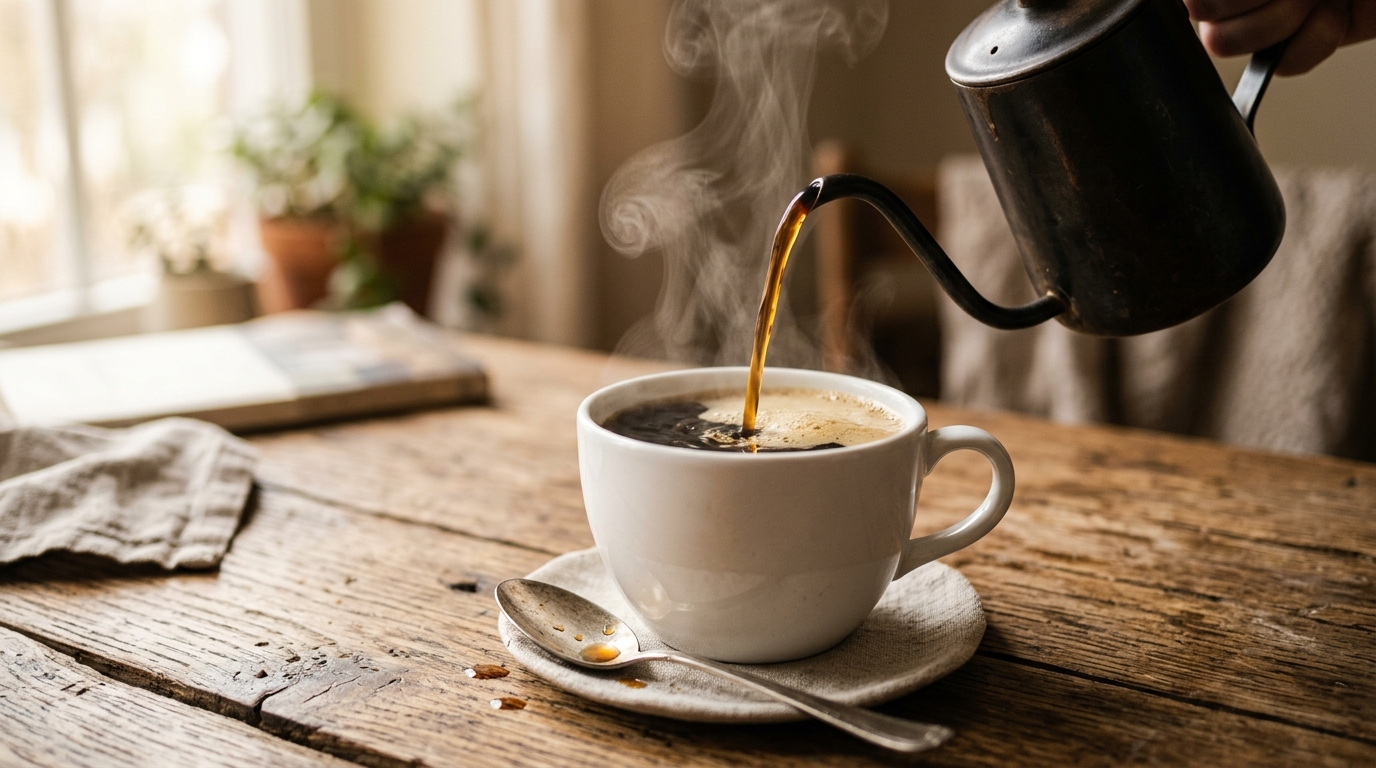
Yes, you can reheat coffee. Whether the result is worth drinking depends on how it was stored, how long it has been sitting, and which reheating method you use. Understanding why reheated coffee tastes different from fresh helps you make better decisions about when to bother and when to just brew a new cup.
Why Reheated Coffee Tastes Different
Coffee’s flavour comes from hundreds of volatile compounds, most of which are unstable. The moment coffee leaves the brewer, oxidation and evaporation begin. Chlorogenic acids, which contribute to coffee’s pleasant bitterness, break down into quinic acid and caffeic acid when exposed to heat. Quinic acid tastes sharply sour and metallic. This is the flavour most people associate with “reheated coffee” and it cannot be reversed by any reheating method.
The window where coffee still tastes reasonable is roughly 30 minutes after brewing. After that, reheating is damage limitation rather than restoration.
Can You Reheat Coffee?
Yes. Coffee has no meaningful food safety concerns , the brewing process already uses water at close to 100°C, and coffee contains antimicrobial compounds that inhibit bacterial growth. The issue with leftover coffee is entirely about flavour, not safety. The exception is coffee with milk or cream added: that should be treated like any other dairy product and refrigerated within two hours.
Reheating Coffee on the Stovetop
The most controlled method. Gentle heat limits further chemical breakdown compared to a microwave burst or leaving the pot on a burner.
- Pour the coffee into a small saucepan.
- Heat over low to medium-low heat, stirring occasionally.
- Remove from heat when it reaches around 60 to 65°C. If you don’t have a thermometer, this is just before it starts to steam visibly. Do not let it simmer or boil.
- Pour immediately. Don’t leave it on the stove after heating.
The target serving temperature for coffee is 57 to 62°C. Above 85°C the compounds that cause sourness form rapidly. Staying below that threshold is the main thing the stovetop method gives you that the microwave often doesn’t.
Reheating Coffee in the Microwave
The fastest method and the one most people use. The risk is that microwaves heat unevenly and can quickly overshoot the target temperature in spots, accelerating the formation of the bitter compounds.
- Pour the coffee into a microwave-safe mug.
- Heat at 70 to 80% power for 45 seconds.
- Stir, then check the temperature or taste it. It should be warm but not scalding.
- If it needs more heat, add 15-second bursts at the same power level.
The reduced power level is important. Full power in a standard 800W microwave will bring a mug of coffee from room temperature to boiling in under two minutes, which is too hot and too fast.
What Doesn’t Work
- Leaving the pot on a hotplate: the slow, continuous heat is the worst possible option. Coffee left on a warming plate for more than 20 minutes develops a cooked, flat bitterness that no reheating can fix
- Boiling it: at 100°C the remaining volatile flavour compounds evaporate rapidly and the acidic breakdown compounds concentrate
- Reheating more than once: each heat cycle compounds the chemical degradation. If reheated coffee doesn’t taste right, brewing a fresh cup is a better use of two minutes
How to Avoid Reheating Altogether
The best solution to reheated coffee is not needing to reheat it:
- Thermos or insulated flask: freshly brewed coffee poured into a prewarmed thermos stays at drinking temperature for two to three hours with minimal flavour change
- Brew smaller batches: most of the flavour degradation in leftover coffee comes from sitting in a half-empty pot, not from the reheating itself
- Cold brew concentrate: if you regularly have leftover coffee, cold brew kept in the fridge lasts up to two weeks and can be heated quickly without the same level of flavour loss
Can You Reheat Coffee With Milk?
Yes, but treat it as a milk-based drink rather than plain coffee. Refrigerate within two hours of making it, and reheat gently to avoid scorching the milk. Scalded milk develops a sulphuric compound that gives a distinctly unpleasant flavour. Heat slowly and stop before it simmers.
How Many Times Can You Reheat Coffee?
Once, and ideally not at all if freshness matters to you. Plain black coffee is safe to reheat multiple times from a food safety standpoint, but the flavour deteriorates noticeably with each cycle. For coffee with dairy, once is the practical and safety limit.
Which Method Should You Use?
| Method | Time | Result | Best For |
|---|---|---|---|
| Thermos (no reheating) | 0 min | Best flavour retention, 2-3h | Avoiding reheating entirely |
| Stovetop (low heat) | 3-4 min | Best of the reheating options | Plain black coffee, careful heating |
| Microwave (70-80% power) | 45-90 sec | Acceptable, watch temperature | Speed, any type of coffee |
Q: I love to make coffee in the morning, but I feel bad that I can never finish the pot. Typically I would adjust the ratio, but whenever I do, I either get very weak coffee or very strong. I like my mix! How can I reheat my coffee to where I don’t need to adjust anything?

A: Many of us are guilty of not being able to finish off the coffee we brew, it just something that happens. Typically, you should not reheat coffee as it will become increasingly bitter the longer you are warming it. Most coffee makers have a warming function, but will turn off after a certain amount of time.
Should you still like to reheat your leftover coffee, the best way to do it is in the microwave.
The Microwave Method
Using the microwave for your coffee is the most common method of reheating beverages. Simply pour the black coffee into a microwave-safe mug, and microwave for 30 seconds and stir. If you would like the coffee to be warmer, microwave intervals 30 second increments.
Reheating any brewed beverages runs the risk of it becoming bitter. However, if you add sugar or creamer, you may notice a stronger taste of the coffee. While some are against it, there is always an option instead of wasting the current pot to make a fresh one.
You should never coffee that has been brewed and left out! Bacteria can grow quickly in the grounds and could drip into your now cooled coffee. Always wash the pot out well, and throw the grounds away once cooled.
3 Responses to “Can You Reheat Coffee?”
Read below or add a comment...
Trackbacks
[…] Can You Reheat Coffee? […]
[…] Can You Reheat Coffee? […]
[…] Can You Reheat Coffee? […]